

Environmental Monitoring Systems
Deploying digital monitoring systems to track ecosystem health, biodiversity and environmental change across Mercosur & South America.
OPPORTUNITY SNAPSHOT - 05
Region:
Paraguay, Mercosur and South American ecosystems
Focus Sectors:
Environmental monitoring, biodiversity tracking, & geospatial analytics
Opportunity Type:
Environmental intelligence platforms
Target Partners:
Research institutes, environmental agencies, satellite data companies
What We Do For you
We analyse environmental monitoring systems and regulatory dynamics, identifying where data, tracking, and reporting capabilities create opportunity, helping organisations align with emerging standards before entering sensitive markets.
The Strategic Importance Of Environmental Monitoring
Environmental monitoring is becoming a strategic requirement for Paraguay and the wider Mercosur region as trade, agriculture and climate pressures intensify.Land-use change, deforestation, methane emissions and water degradation are no longer only environmental concerns. They are increasingly linked to market access and regulatory compliance.
European requirements, especially those related to deforestation-free supply chains, are creating strong demand for better monitoring and traceability systems.
At the same time, national institutions are expanding their interest in digital environmental information systems, satellite services and climate-related monitoring tools.Environmental monitoring systems can therefore become a core enabling layer for sustainable exports, risk management and stronger environmental governance.
Environmental Monitoring In Paraguay And Mercosur
A Region Of Global Ecological Importance
Mercosur includes ecosystems of major global significance, including the Gran Chaco, Amazon-linked regions, river basins and biodiversity-rich agricultural frontiers.
Paraguay plays an important role within this landscape through its beef, soy and rice sectors, all of which are increasingly exposed to environmental scrutiny.
Monitoring As A Trade And Governance Tool
As export markets become more demanding, environmental monitoring is shifting from a technical niche into a strategic requirement for trade continuity and institutional credibility.
Reliable monitoring systems can help countries, companies and regulators respond more effectively to deforestation, emissions, water stress and biodiversity loss.
Forces Driving Environmental System Modernisation
Regulatory Pressure
European regulation, especially around deforestation-free supply chains, is increasing the need for robust land-use monitoring and traceability systems.
Institutional Digitisation
Paraguay is strengthening environmental information systems and satellite-related capabilities, creating a new foundation for digital monitoring services.
Climate And Land Pressure
Deforestation, land-use change, emissions and water stress are intensifying the need for continuous and more reliable environmental intelligence.
Funding Pathways for Structured Opportunities
Instituto del Atlántico enables access to experienced Dutch and EU specialists who support funding pathways for feasibility, market-entry, and innovation initiatives, strengthening the ability of well-structured opportunities to progress with appropriate financial support.

Why Environmental Monitoring Must Modernise
Current Structural Limitations
Many environmental monitoring functions still depend on manual inspection, fragmented databases and irregular field reporting, which limits speed and geographic coverage.
Institutional systems are improving, but data-processing capacity, interoperability and rural connectivity remain uneven across Paraguay and the broader region.
The Opportunity For Integrated Monitoring
Modern environmental monitoring systems can combine satellite imagery, ground sensors and digital registries into a more coherent and responsive information architecture.
This allows faster alerts, stronger compliance verification and better operational planning for both public institutions and export-oriented industries.
Growing Pressure On Environmental Governance
Paraguay’s environmental governance is evolving under simultaneous pressure from international regulation, domestic institutional reform and increasing ecological risk.Deforestation in the Gran Chaco and broader concerns over land-use change have heightened attention from buyers, regulators and civil society.
At the same time, satellite technologies, AI and lower-cost sensor systems are making advanced monitoring more practical and more scalable.This combination of pressure and technical possibility creates a strong window for new environmental intelligence systems and service models.What was once considered specialist monitoring is now becoming a critical infrastructure layer for trade, planning and sustainability.
Technologies Transforming Environmental Monitoring
Earth Observation Platforms
Satellite systems can monitor forest cover, water bodies, crop patterns and environmental change at scale, with far lower cost per hectare than traditional field inspections.
Sensors And Field Networks
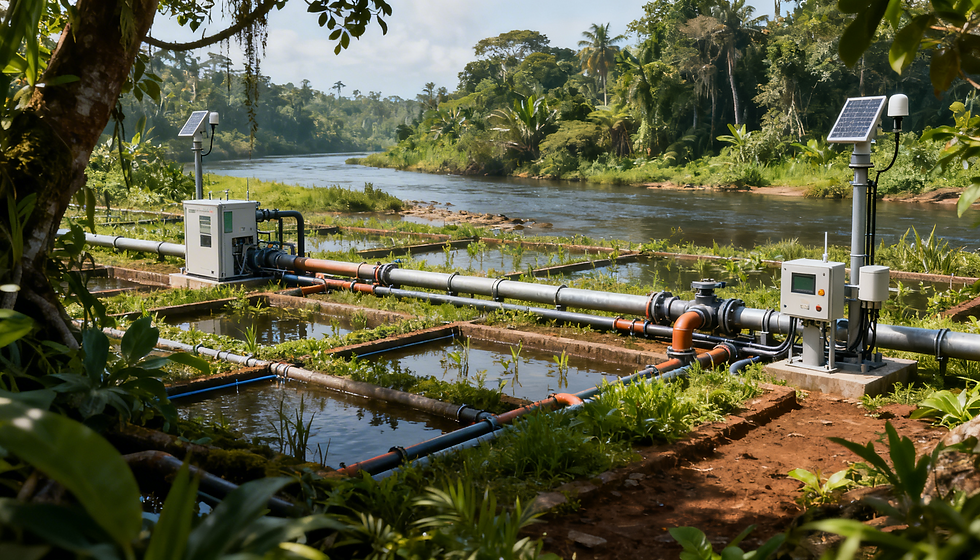
IoT and in-situ monitoring devices provide real-time data on air, water, soil and infrastructure conditions, improving resolution and operational responsiveness.
AI And Decision Analytics
Artificial intelligence helps detect anomalies, compare satellite imagery with permit data and generate more useful alerts for enforcement and planning.

Environmental data systems can turn compliance pressure into a long-term advantage for exports, governance and sustainable land management.
Dutch Expertise In Environmental Monitoring
The Netherlands has strong international capabilities in Earth observation, climate monitoring, biodiversity intelligence and environmental data infrastructure.Dutch organisations are active in satellite missions, AI-based environmental analytics and digital platforms designed to support climate and biodiversity management.This expertise includes both technical hardware and the system-level integration required to turn raw data into practical monitoring services.
Dutch institutions also work at the intersection of science, regulation and implementation, which is particularly valuable in compliance-driven environments.These strengths make Dutch partners well suited to support Paraguay and Mercosur in building modern environmental monitoring architectures.
Digital Technologies For Environmental Monitoring
Monitoring And Data Acquisition
Satellite imagery, low-cost sensors and field devices create a distributed data layer capable of tracking environmental change across forests, river systems and agricultural landscapes.
This makes it possible to move from isolated snapshots to near-real-time observation across large and difficult-to-access territories.
Integration And Actionable Intelligence
Cloud-based platforms, analytics engines and AI models turn raw data into compliance tools, alerts, dashboards and operational recommendations.
These systems become much more valuable when connected to permitting records, cadastral information and supply-chain traceability databases.
Key Stakeholders In Environmental Monitoring System Development
Public Institutions
Environmental ministries, space agencies, agricultural authorities and trade-related agencies define priorities for regulation, data systems and monitoring enforcement.
Industry And Value Chains
Beef, soy, rice and forestry actors need stronger monitoring and traceability systems to maintain market access and manage environmental risk.
Research And Tech Partners
Universities, NGOs, EO specialists and digital monitoring firms contribute methods, data infrastructure and applied analytics for system development.
Stronger environmental intelligence can help Mercosur exporters prove compliance, reduce risk and build greater confidence in sustainable production.
Developing Environmental Monitoring Systems
Pilot and Feasibility Phase
The first step is to identify priority use cases where regulatory pressure, environmental risk and institutional readiness create a strong case for pilot deployment.
Examples include deforestation-free cattle chains, rice methane monitoring, water-quality systems or landscape monitoring in vulnerable Chaco zones.
Scaling Through Platforms And Partnerships
Once pilots demonstrate value, systems can be expanded through national data platforms, stronger institutional workflows and broader integration with trade and compliance systems.
This allows isolated monitoring tools to evolve into wider environmental intelligence services supporting multiple sectors and public agencies.

Future Outlook For Environmental Monitoring Systems
Environmental monitoring systems are likely to become more central to trade, climate adaptation and land-use governance across Mercosur in the coming years.For Paraguay, the combination of export exposure, ecological importance and improving digital capacity creates especially strong conditions for system development.As compliance frameworks mature, monitoring will increasingly need to support not only reporting but also operational and strategic decision-making.
This means future systems will require stronger integration between EO platforms, national databases, field verification and industry-facing applications.Over time, environmental monitoring can evolve from a defensive compliance tool into a strategic asset for sustainability, competitiveness and institutional modernisation.
Funding Opportunities For Environmental Monitoring Systems
Dutch Funding Programs
Dutch instruments such as DHI, SIB and PIB can support feasibility studies, market development, pilot systems and Dutch cluster formation around EO and environmental intelligence.
International Financing
Horizon Europe, Global Gateway, the EIB, the World Bank, the IDB and ESA-linked programmes can support digital monitoring, climate systems and environmentally aligned infrastructure.