
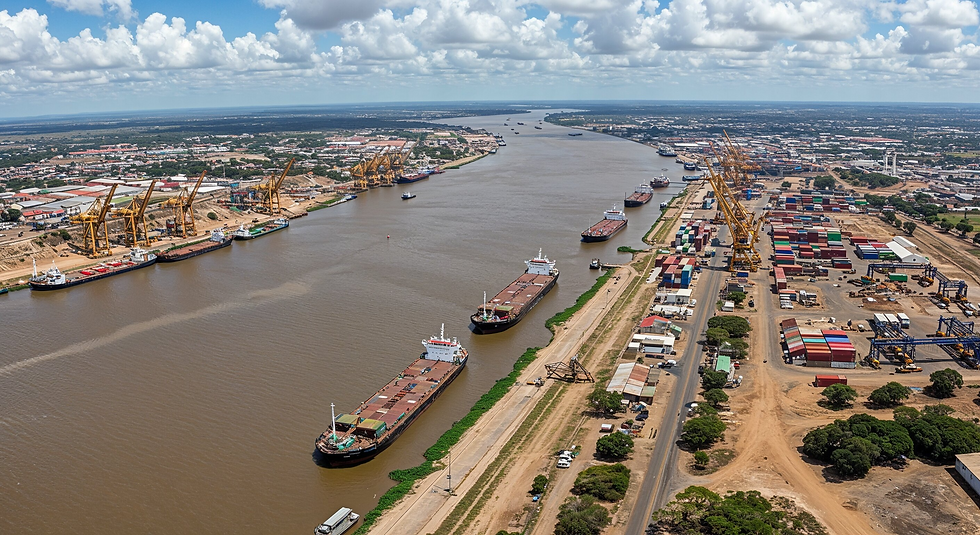
River Logistics Systems
Modernizing cargo transport along the Paraguay–Paraná waterway through intelligent logistics systems, digital navigation and integrated
port infrastructure.
OPPORTUNITY SNAPSHOT - 01
Region:
Mercosur & Paraguay
Focus Sectors:
River logistics, ports, digital transport systems & agricultural export corridors
Opportunity Type:
Logistics Modernisation & Digital Infrastructure
Target Partners:
Inland shipping technology companies, smart river navigation system developers, logistics optimisation software providers, river infrastructure engineering firms.
What We Do For you
We produce structured insight into inland logistics systems, clarifying flows, constraints, and coordination gaps, helping organisations understand where digital and operational improvements create real opportunity before committing.
The Strategic Importance Of The Paraguay River Corridor
The Paraguay–Paraná waterway forms one of the most important inland transport corridors in South America. Stretching more than 3,000 kilometres across the Mercosur region, the river system connects inland agricultural production areas with major export ports along the Atlantic coast.
For Paraguay, which is a landlocked country, this river corridor functions as the primary gateway to global markets. A large share of the country’s agricultural exports, fuels and bulk commodities move through the waterway, making reliable and efficient river logistics critical for national and regional trade.
A Continental Inland Trade Corridor
A Continental Trade Corridor
The Paraguay–Paraná waterway connects five countries and serves as a major transport backbone for Mercosur trade. Cargo generated in inland production zones travels along the river toward export ports in Argentina and Uruguay, linking regional agriculture and industry to global supply chains.
Soybeans, grain products, minerals and fuels are among the most common cargoes transported along the system.
These commodities rely on predictable river transport conditions to remain competitive in global markets.
Paraguay’s Dependence on River Transport
Paraguay has developed one of the largest inland barge fleets in the world. Thousands of barges and push boats move cargo along the river corridor every year, supported by dozens of private river ports and shipyards.
Despite this impressive industrial capacity, many parts of the logistics system still rely on limited digital coordination, fragmented planning processes and insufficient real-time navigation data.
Forces Driving River Logistics Transformation
Trade Expansion
Agricultural production in Paraguay and neighbouring countries continues to grow, particularly in soybeans, grains and livestock products. Increasing export volumes place greater pressure on the river logistics system and highlight the need for more efficient cargo planning and transport coordination.
Climate Pressure
Recent drought periods have significantly lowered water levels in parts of the Paraguay River, temporarily reducing barge capacity and disrupting trade flows.
Climate variability is becoming a structural challenge for logistics planning and requires improved monitoring and adaptive systems.
Corridor Development
Major regional infrastructure projects such as the Bioceanic Corridor are strengthening trade connections between Atlantic and Pacific markets. These developments will increase cargo flows through Paraguay and intensify demand for reliable multimodal logistics coordination.
Funding Pathways for Structured Opportunities
Instituto del Atlántico enables access to experienced Dutch and EU specialists who support funding pathways for feasibility, market-entry, and innovation initiatives, strengthening the ability of well-structured opportunities to progress with appropriate financial support.

Operational Bottlenecks In River Transport
Current System Limitations
Although river transport is cost-efficient, several operational challenges still limit its full potential across
the Paraguay–Paraná corridor.
Navigation planning, port coordination and cargo scheduling often rely on manual processes and fragmented information.
Digital Coordination Opportunities
Digital logistics platforms can connect vessels, terminals and cargo owners through integrated data systems
Such systems allow operators to coordinate cargo flows more efficiently and improve reliability across the transport network.
Growing Pressure On River Logistics
River logistics already support a highly competitive export sector in Paraguay and neighbouring countries.However, increasing cargo volumes and changing climate conditions create new operational challenges for logistics planning.Digital technologies can improve the coordination of vessel movements and cargo flows along the corridor.Better data integration between operators and ports can significantly reduce delays and improve system efficiency.Modern logistics platforms therefore represent an important opportunity for strengthening the corridor’s resilience.
Technologies Transforming River Transport
Digital Logistics Platforms
Integrated logistics platforms connect operators, cargo owners and ports through shared information systems that coordinate cargo flows in real time.
Navigation Monitoring Systems
Satellite navigation systems and smart buoys provide continuous information about vessel position, river depth and channel conditions.
Smart Port Infrastructure
Modern terminals increasingly use digital port management systems and automated equipment to reduce turnaround times.

Modern logistics technologies could transform the Paraguay–Paraná corridor into a coordinated digital transport system supporting growing trade flows.
Dutch Expertise In Waterway Logistics
The Netherlands is globally recognised for expertise in waterway management, port development and logistics innovation.Dutch companies have extensive experience in integrating digital systems into maritime and inland transport networks.Their technologies support efficient cargo handling, advanced navigation monitoring and data-driven logistics planning.These capabilities make Dutch technology providers valuable partners for river logistics modernization.Collaboration between Dutch companies and regional operators could accelerate the adoption of smart logistics systems.
Digital Technologies For River Corridors
Monitoring and Sensor Technologies
Sensors and Internet-of-Things technologies enable vessels, infrastructure and cargo systems to share operational data continuously.
These technologies provide real-time information that supports fleet management and navigation safety.
Advanced Analytics Systems
Artificial intelligence and advanced analytics allow operators to predict congestion and optimize vessel scheduling.
Digital twins can simulate river traffic patterns and help planners evaluate infrastructure improvements.

Key Stakeholders In River Logistics Systems Development
Public Institutions
Government agencies responsible for waterways, transport and infrastructure regulate navigation and coordinate regional agreements.
Industry Operators
Barge operators, agribulk traders and port terminals form the operational backbone of the river logistics system.
International Financiers
Institutions such as the Inter-American Development Bank and World Bank support infrastructure modernization in the region.
Smart river logistics systems can significantly improve efficiency, sustainability,
and reliability across the Mercosur trade corridor.
Developing Smart River Logistics Systems
Pilot and Feasibility Phase
Initial feasibility studies can identify operational bottlenecks and digital technology opportunities across
the river logistics system.Pilot projects can test new logistics platforms and monitoring technologies in selected ports.
Scaling Across the Corridor
Successful pilots could demonstrate operational improvements and attract larger investments in digital logistics infrastructure.Over time coordinated logistics platforms could connect multiple operators and ports across the entire corridor.

Future Outlook For River Logistics In Mercosur
Cargo volumes along the Paraguay–Paraná corridor are expected to continue growing as agricultural production expands and regional trade integration strengthens.Climate variability will increase the importance of better monitoring systems and more adaptive logistics planning across the river transport network.Digital technologies now make it possible to coordinate vessel movements, cargo flows and port operations with far greater efficiency.Integrated logistics platforms could significantly strengthen the resilience and competitiveness of the corridor in the coming decades.These developments create new opportunities for international technology providers and logistics innovators interested in emerging markets.
Funding Opportunities For Corridor Innovation
Dutch Funding Programs
Programs such as DHI, PIB and SIB can support feasibility studies, pilot projects and international partnerships.
International Financing
Institutions such as the European Investment Bank,Inter-American Development Bank and World Bank support infrastructure modernization across Latin America.
Explore This Opportunity
Instituto del Atlántico supports companies exploring emerging opportunities in Mercosur through research, partner identification and opportunity development.